Who repairs the damage after trace and access opens your floor or wall
A builder, tiler or plasterer puts the opening back. ADI does not carry out this work. Trace and access is the insurers' term for finding a leak and cutting in to reach it.
Who puts back the floor, wall or ceiling after a leak repair
A building trade puts the opening back once the pipe is repaired and the area has dried.
The four jobs after the cut, in order
- Repair the pipeADI, on requestor the firm that opened up
- Dry the areaA drying firm
- Close the openingA builder or plasterer
- Lay the finishA tiler or floor layer
- Closing and finishing: arranged by your insurer where it has accepted the claim, otherwise by you.
- Drying: ask your insurer who arranges it.
- If your insurer wants to use its own repairer, see the insurer's firm or your own.
How insurers settle, and what ADI does
The Financial Ombudsman Service lists the usual ways an insurer settles: repairing the damage, replacing what was lost or damaged, or paying cash to cover the cost.
ADI locates leaks and, on request, opens up and repairs the pipe. It does not carry out drying or putting back. Its FAQs say it can recommend a national company to help with the claim and with the work that follows.
Sources: the Ombudsman's Settling home insurance claims and ADI's leak detection FAQs.
Why nothing is put back until it has dried
Repairing the pipe does not dry the floor. ADI's FAQs say the area has to dry out thoroughly before any putting back starts.
A drying firm determines how long this takes.
Source: ADI's leak detection FAQs.
What counts as damage from the search, and what does not
The opening made to reach the pipe and the damage caused by the water are separate matters, and an insurer can treat them differently.
How one Ombudsman decision drew the line
- The water damage: the insurer had declined it because it had built up over time. The Ombudsman agreed.
- The search, the cutting in and putting that opening back: the Ombudsman told the insurer to pay, because the policy did not make one depend on the other.
This is one case, decided on one policy's wording. It does not indicate how yours will be read.
For guidance on reading your own clause, see Trace and Access Cover.
Source: Financial Ombudsman Service decision DRN-3869874.
Insurance and matching tiles or flooring after a leak
The Ombudsman expects an exact match, or failing that the closest equivalent. Where a matching set (things bought to match, such as one room's tiles) no longer matches, it usually expects the customer to receive some payment.
Read the Ombudsman's five points
- First choice: the same as what was lost,
ideally, an exact match
. - No exact match: the closest equivalent,
as long as it's broadly as good or better
. - The untouched tiles around it: not automatically replaced. Most policies only oblige the insurer to deal with the damaged item itself.
- A matching set that no longer matches: it has often said a fair figure is 50% of the cost of replacing the undamaged parts of the set.
- What counts as one set: judged case by case. Its own example: the same carpet in two rooms may not be one set if a door bar divides them.
This is how complaints are assessed. It does not predict the outcome of your claim.
Source: the Ombudsman's Settling home insurance claims.
If the insurer's own repairer does the work
The insurer is then responsible for the repairer, any subcontractors and the time the work takes. Poor workmanship is the insurer's responsibility to put right.
Source: the Ombudsman's Settling home insurance claims.
If you are paying to have it put back yourself
- Ask for putting back to be quoted separately from the pipe repair, so that each job is identified.
- State at the outset whether the finish must match the existing one.
If the insurer will not pay for putting it back
This is treated like any other refusal. Refused, or paid short sets out what to check and how to complain.
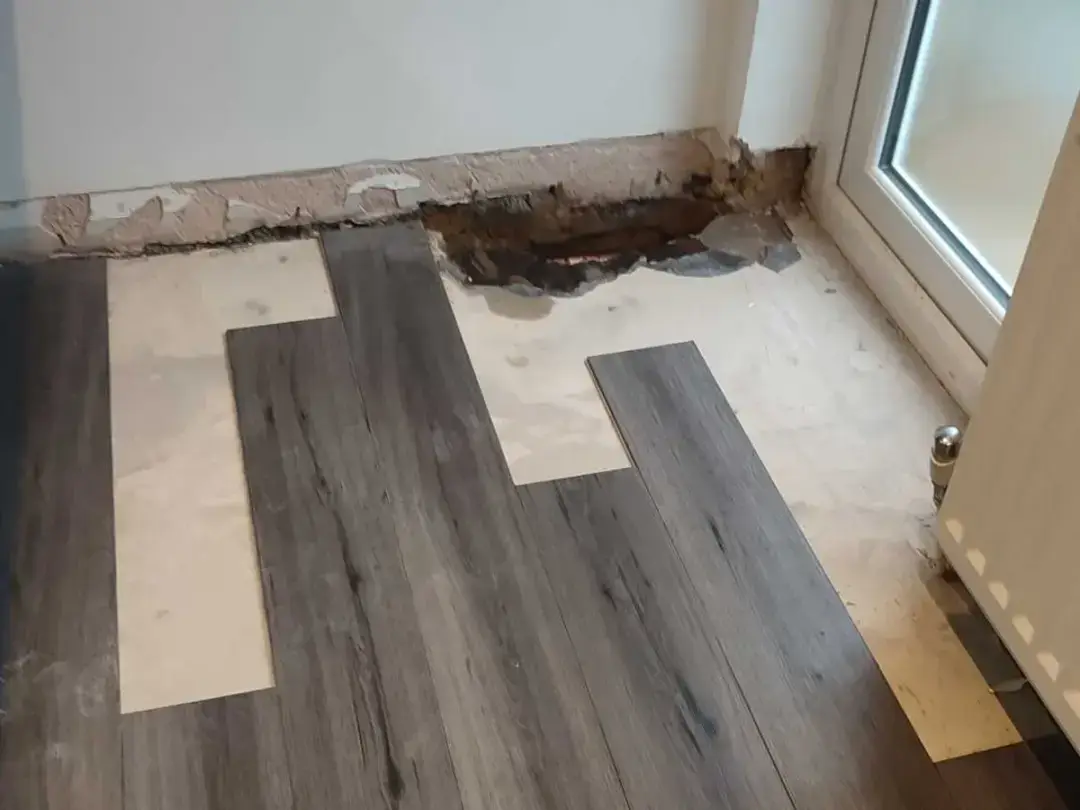
Example from ADI's records: a kitchen floor in Burnham
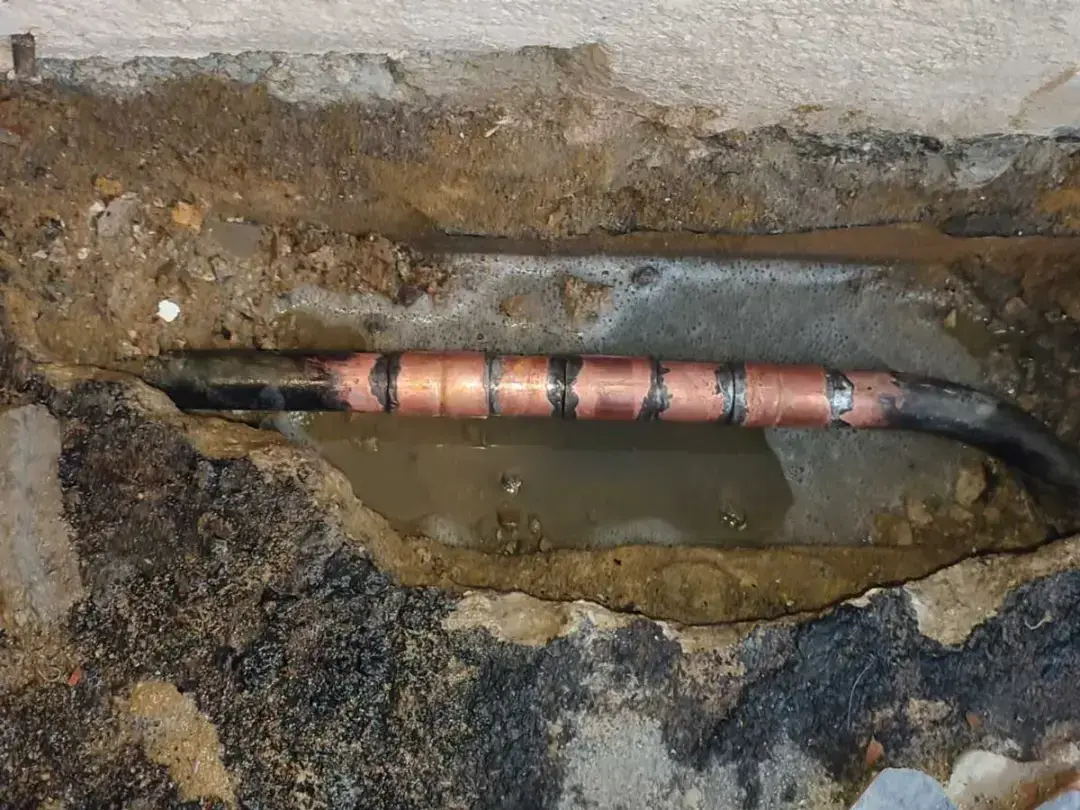
In a detached house, a copper heating pipe had failed inside the concrete layer beneath the kitchen floor covering.
- What was opened
- Some laminate tiles, a few lengths of skirting and the concrete layer above the fault. Three separate tests had agreed on the position first, which kept the opening to that one area.
- What was repaired
- A new length of pipe replaced the corroded one, and the heating passed a pressure test before being refilled.
- What was put back
- The record shows the kitchen floor partly put back, with laminate relaid over the repair once it had been tested.
- What this shows
- A smaller opening leaves less to restore. How precisely the leak was located decided how much flooring came up.
From ADI's record of the job. It is one job, given as an example, and it does not show what will happen in yours.
Every source on this page was read on 6 October 2026.