How much of the floor is dug up to reach a leak, and who does the digging
The floor or wall is opened to expose the leaking pipe, normally by the firm that repairs it. A leak detection visit does not include opening up.
Why the floor or wall has to be opened at all
Surface testing narrows a leak down to a location. Confirming and repairing it requires access to the pipe.
From a located point to a repaired pipe
- Located from the surfaceADI
- Opened around that pointThe repairing firm
- Pipe repaired with the leak exposedThe same firm
- Dried, then put backA drying firm, then a building trade
Read ADI's wording
gaining access is essential to confirm the location of the leak and will also be required to carry out a repair
Source: ADI's leak detection FAQs.
Who cuts into the floor to reach a leak
The firm repairing the pipe makes the opening.
- Where ADI carries out the repair: ADI opens up.
- Where your insurer's contractor or your own plumber carries out the repair: that firm opens up. See the insurer's firm or your own.
Why a quote for locating a leak excludes opening up
ADI quotes for and carries out opening up together with the repair. The charge is normally included in the repair quote and can be itemised on request. ADI's terms state:
a quote for Leak Detection does not include making access to the leak, because we would not expose a leak without also having the intention of repairing it
Source: ADI's terms and conditions of service.
How much of the floor or wall is opened
There is no standard size. It depends on:
- how closely the leak was located,
- what the floor, wall or ceiling is made of,
- what else runs alongside the pipe.
Ask to be shown the position and size of the opening before work starts.
Read ADI's FAQs and terms
ADI's FAQs say only that, depending on where the leak is, we may need to cut a hole in the wall or lift flooring
.
Its terms warn that other pipes, fixtures and fittings next to the leaking one can be damaged while it is being reached, more so where pipes sit close together or there is little room to work.
Sources: ADI's leak detection FAQs and terms and conditions of service.
Trade terms: secondary access and intrusive access
Both terms refer to step 2 in the drawing: reaching the pipe once its position is known.
Read ADI's wording
Secondary or intrusive access refers to the second part of the process, and this is typically the part which causes the most inconvenience and disruption to our customers
Source: ADI's leak detection FAQs.
A located leak is a strong indication until the pipe is seen
Readings indicate a location. The leak is confirmed when the pipe is uncovered and the water is seen.
Read ADI's terms on this
Where ADI has located a leak without opening up and repairing it, its terms say the position its engineer gives you
is based on evidence picked up by our non-invasive equipment only and does not represent a definitive claim as to the location of a leak
Source: ADI's terms and conditions of service.
Seven points to agree before the floor is opened
Put these questions to the firm that will open up.
- Where exactly will you open, and why there?
- Who will do the cutting?
- Who will repair the pipe once it is uncovered?
- What happens if the pipe is not where the readings indicated?
- What is next to the pipe that could be damaged?
- In what condition will the opening be left?
- Who will put it back? ADI does not. See Who puts it back.
If you are claiming on insurance, obtain your insurer's agreement before work starts. See Trace and Access Cover.
Flats and rented property
- In a flat, the neighbouring flat's owner and the managing agent (the firm that runs the building) must be involved first. See Flats under a building policy.
- If you rent, the decision to open up rests with your landlord. See Renting or letting.
Source: ADI's terms and conditions of service.
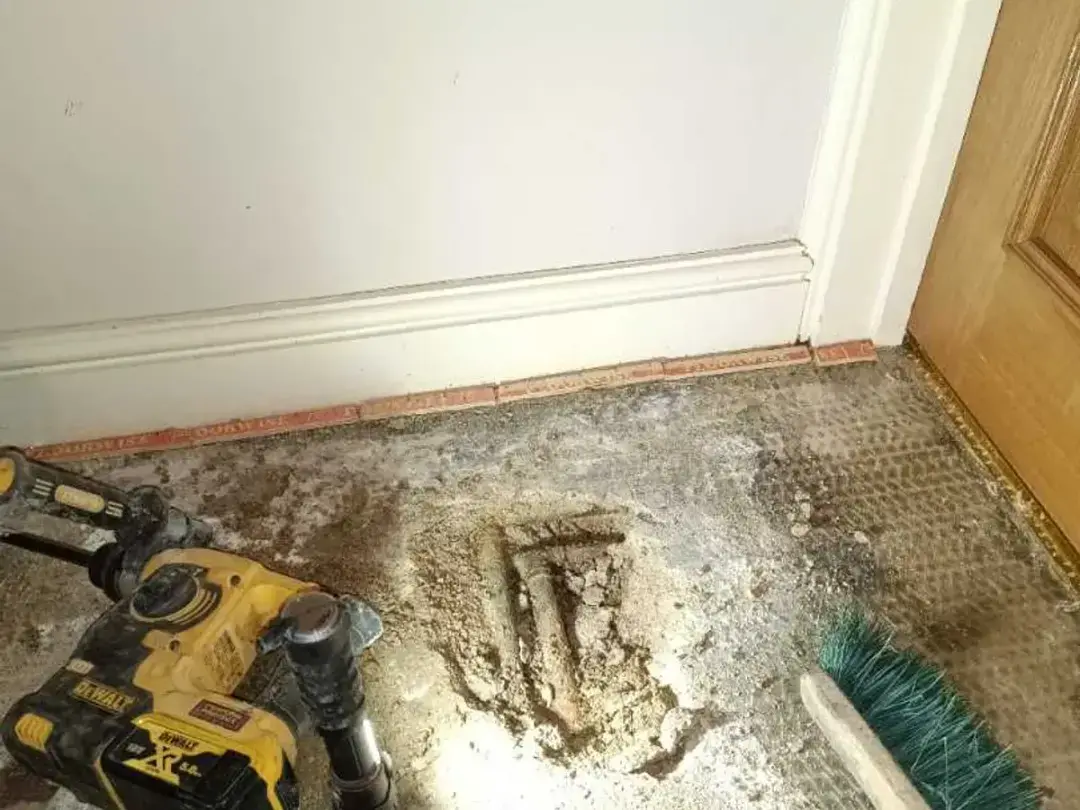
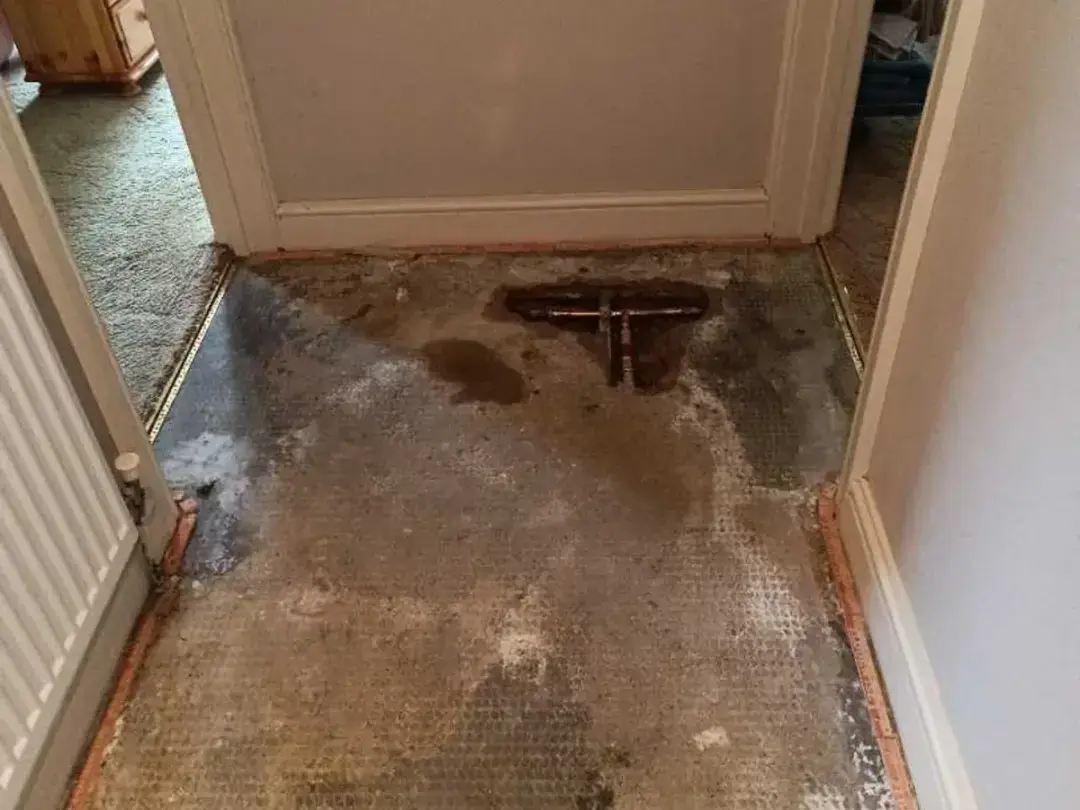
Example from ADI's records: a hallway floor in Amesbury
A heating pipe was leaking beneath the concrete floor of a hallway. This is how the opening was decided.
- What was known
- A hallway wall read damp on a meter. No water could be seen anywhere in the house.
- How the position was found
- Damp readings identified the hallway as the area. Once the carpet was up, a tracer gas (put into the pipes and picked up by a detector where it leaks out) came through the concrete at one point.
- What was opened
- The concrete floor at that point, after the carpet had been lifted.
- Who repaired it
- ADI. The engineer replaced the faulty joint and then pressure tested the heating.
- How it was left
- The floor was still wet, and the engineer advised leaving the carpet up until it had dried. Putting the floor covering back was a later job.
From ADI's record of the job. It is one job, given as an example, and it does not show what will happen in yours.
Every source on this page was read on 6 October 2026.