Leaseholder with a leak: who arranges and pays for trace and access on the block policy
Start with the managing agent, the firm that runs the building. The cost of tracing a leak is claimed on the block policy, if it includes that cover.
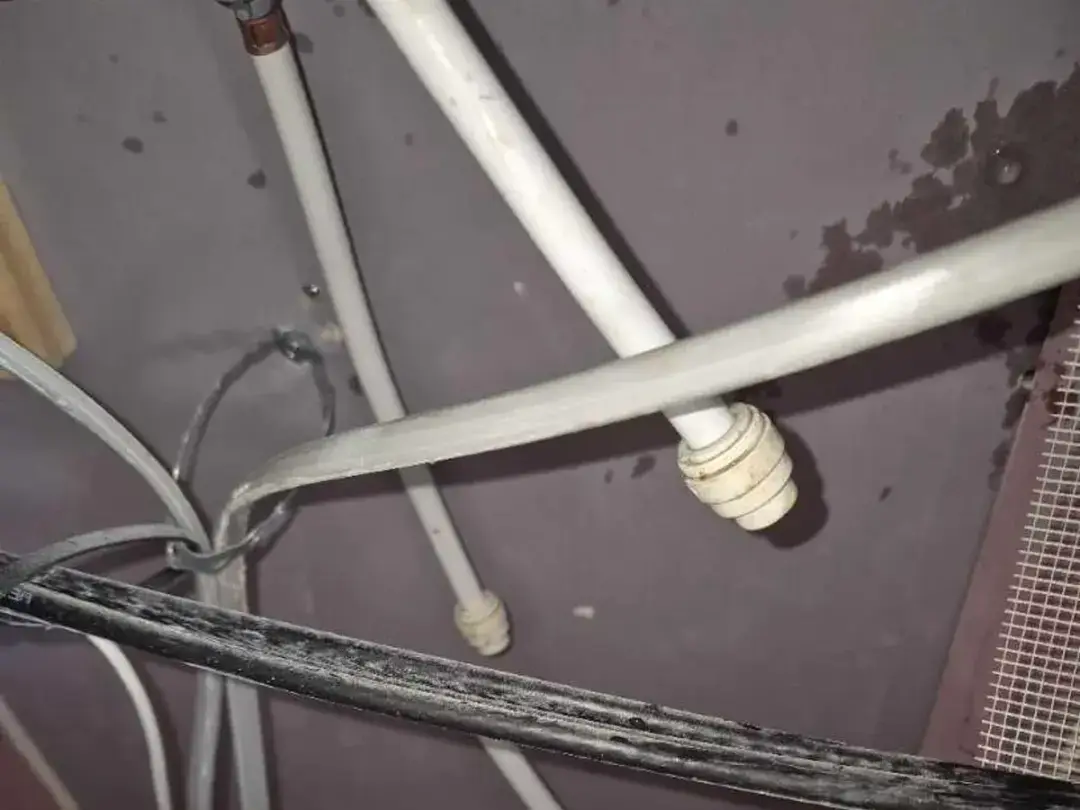
Whose insurance pays to trace a leak in a leasehold flat
Usually the building's policy, arranged by your freeholder or management company, and only if it has trace and access cover (for finding a leak and cutting in to reach it). You cannot claim on it yourself, so ask the freeholder. LEASE, the Leasehold Advisory Service, suggests this wording:
Ask your landlord if the buildings insurance policy has cover for tracing the source of a leak.
In LEASE's guidance, landlord means your freeholder. Your possessions are a matter for your own contents policy.
Read more of LEASE's wording
- What decides it. Who fixes and who pays
depends on the cause of the leak, what your lease says, and the terms of insurance policies for your building
. - Who claims.
Your landlord is responsible for arranging buildings insurance and you'll need to ask them if they can make a claim.
- What you own.
Buildings insurance will not cover damage to your possessions
.
This site cannot say what your building's policy covers. See Trace and Access Cover on Which policy applies in a flat?
Source: LEASE, Water leaks in leasehold flats, updated 16 December 2025. It covers leasehold flats in England and Wales, as does this page.
Why the leak is often not in the flat with the damp ceiling
Water appears where it settles, which may not be where it escaped. The pipe may be in the flat above, in an adjoining flat or in a riser (the boxed-in run of shared pipes), so the search may extend into another flat.
Which policy applies, and who must agree
- The leaking pipe and the search The block's buildings policy, if it has cover. The freeholder claims.
- Your possessions below the damp area Your own contents policy.
- The flat above Its owner or occupier agrees to entry.
- The riser and shared areas The freeholder or managing agent agrees.
ADI may need to test in both flats.
Read what LEASE and ADI say
- LEASE:
Sometimes a leak is hard to trace because the building may have many pipes and appliances. Water can also travel through the structure of a building.
- ADI's FAQs, before you book:
If the property is a flat then we may require access to the flat above or below to carry out some of our tests.
- What most often prevents ADI finding a leak: it
is when we cannot get access to the area in question. This is typically in blocks of flats
.
Sources: LEASE, Water leaks in leasehold flats; ADI's leak detection FAQs and terms of service.
Who can authorise opening up in another flat or a shared area
You cannot authorise this alone.
- A neighbour's flat: its owner or occupier.
- A shared area: the freeholder or the managing agent.
- A neighbour who will not cooperate: ask the freeholder or managing agent to intervene.
Read LEASE's wording
If your neighbour is not cooperating, ask the landlord or managing agent to help. They will usually have a power under the lease to get access to a flat to investigate a problem, although the lease may say that you need to cover their costs.
What is permitted in your case is set out in your lease.
Source: LEASE, Water leaks in leasehold flats.
Six questions for your managing agent
Send these in writing and ask for written answers.
- Does the block policy pay for tracing the source of a leak?
- Who must notify the insurer, and has that been done?
- Is there an excess (the first part of a claim, which the policy does not pay), and who bears it?
- Who instructs the leak detection firm?
- Who arranges entry to the other flat, or to the riser?
- Who agrees to anything being opened, and to it being put back? See Before your floor or wall is opened and Who puts it back.
Read LEASE on the excess
The excess might be recoverable from the person who was responsible for the leak, or it might be shared by all leaseholders through the service charge. This will depend on what the lease says.
The questions are ADI's. The excess is from LEASE, Water leaks in leasehold flats.
If the block buildings insurance does not pay for trace and access
Who bears the cost then depends on your lease and on the cause of the leak. Ask the managing agent and check your lease.
Read the routes LEASE describes
- The freeholder was responsible:
They may then recover the costs from all the leaseholders through the service charge, or they may be able to claim on the buildings insurance.
- A neighbour was responsible: you ask the neighbour to pay.
- Neither insurance nor the neighbour pays:
If insurance does not cover the damage and your neighbour refuses to pay, it's possible to take legal action, but this should be a last resort.
LEASE's wording concerns repairs and damage. It does not separately address who pays for a search that insurance does not cover.
- Water passing between flats: Flat Leak Detection.
- An insurer has refused the search: Refused, or paid short.
Example from ADI's records: two flats in Folkestone
In a block of flats, damp and mould had spread over the ceiling and wall of one flat. The cause lay in the flat overhead.
- Where the damage was
- In the lower flat, directly beneath the flat upstairs.
- Where the leak was
- Upstairs. Old heating pipes that were no longer in use were leaking at low level. The upper flat's boiler was showing very low pressure.
- What was opened
- A plasterboard ceiling in the upper flat, once the customer had agreed. The old pipes were capped and the heating retested.
- What was left to do
- The opened ceiling needed repairing. With the leak stopped, the lower flat could be dried and its damage repaired.
From ADI's record of the job. It shows the search and the opening taking place in a different flat from the damage. It is one job, given as an example.
Every source on this page was read on 6 October 2026.